all in one place.
Log what you watch. Rate your favorites. See what friends are into.
Log what you watch. Rate your favorites. See what friends are into.
Director
Where to Watch
Log what you watch. Rate your favorites. See what friends are into.
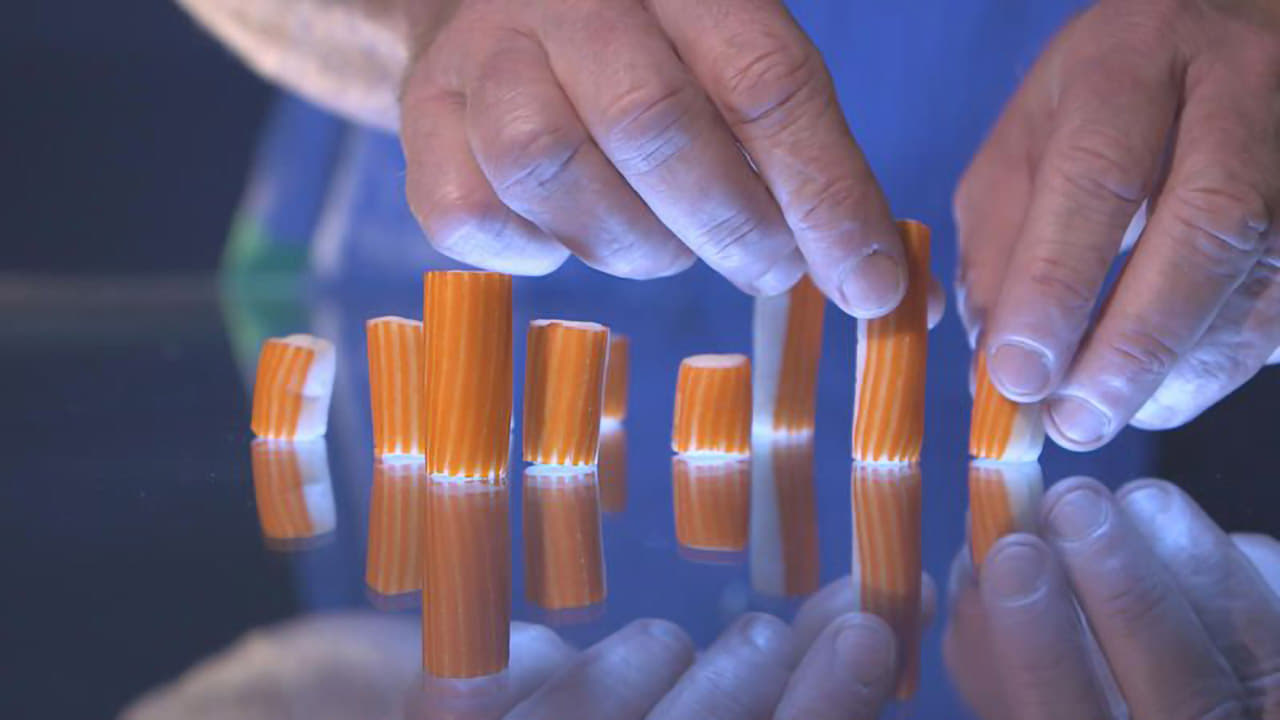
Sticks, cubes, supremes, medallions, rillettes, shredded, sliced: surimi comes in all forms. Having appeared on the European market about twenty years ago, its success has been meteoric. Each French family eats an average of three kilos per year: France is the second largest consumer in the world after Japan. Neither fatty nor too high in protein, surimi contains neither crab nor fish waste. Yet, originally, this product is an art. Called Kamaboko in Japan, meaning "fish flesh," traditional surimi contains almost 100% fish. From five-star Japanese surimi to industrial crab sticks, the secret of its recipe begins 600 meters deep in the ocean.
September 1, 2021 · 52m
Sticks, cubes, supremes, medallions, rillettes, shredded, sliced: surimi comes in all forms. Having appeared on the European market about twenty years ago, its success has been meteoric. Each French family eats an average of three kilos per year: France is the second largest consumer in the world after Japan. Neither fatty nor too high in protein, surimi contains neither crab nor fish waste. Yet, originally, this product is an art. Called Kamaboko in Japan, meaning "fish flesh," traditional surimi contains almost 100% fish. From five-star Japanese surimi to industrial crab sticks, the secret of its recipe begins 600 meters deep in the ocean.